
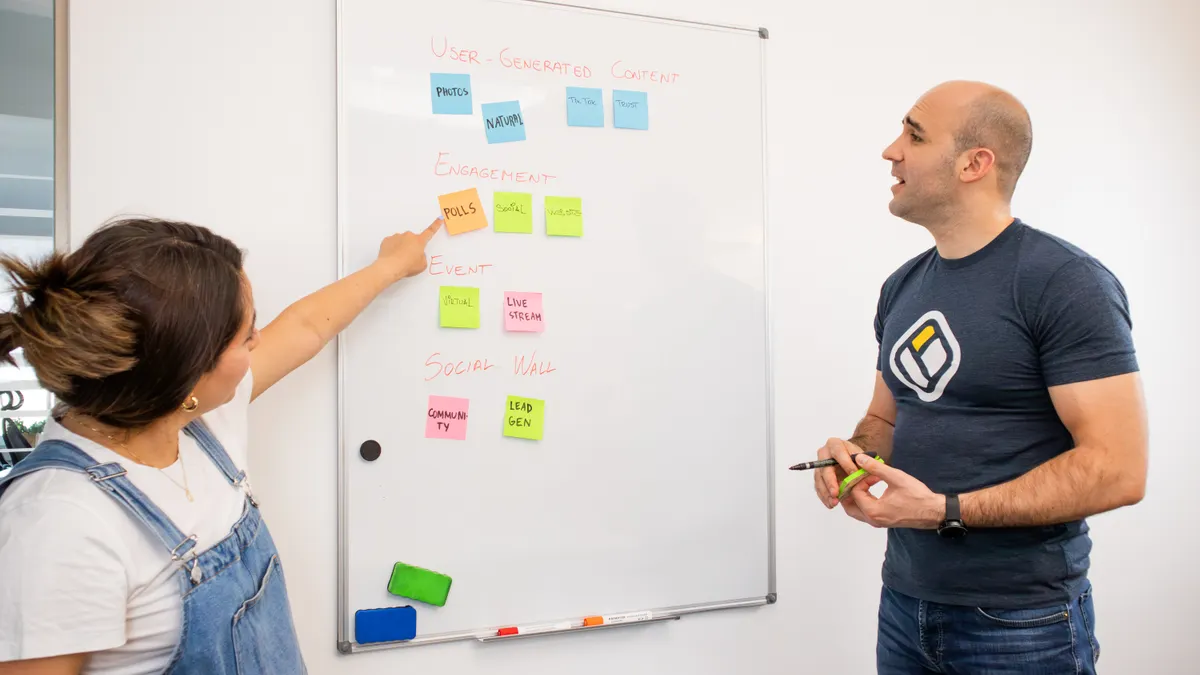
Last updated: October 25, 2026
Quick Answer: prevent content overlap in large article plans by giving each of the 20 articles one primary query, one angle, and one exclusion list before drafting starts.
In short: preventing content overlap in large article plans is a planning problem, not a cleanup problem, and the safest fix is to separate topics before a brief is written. If a large set of articles starts with a topic map, a clear primary query for each page, and a rule for secondary keyword use, the chances of two drafts saying the same thing drop sharply. This article is about how to prevent content overlap when planning large article sets.
Content overlap prevention starts before the first brief
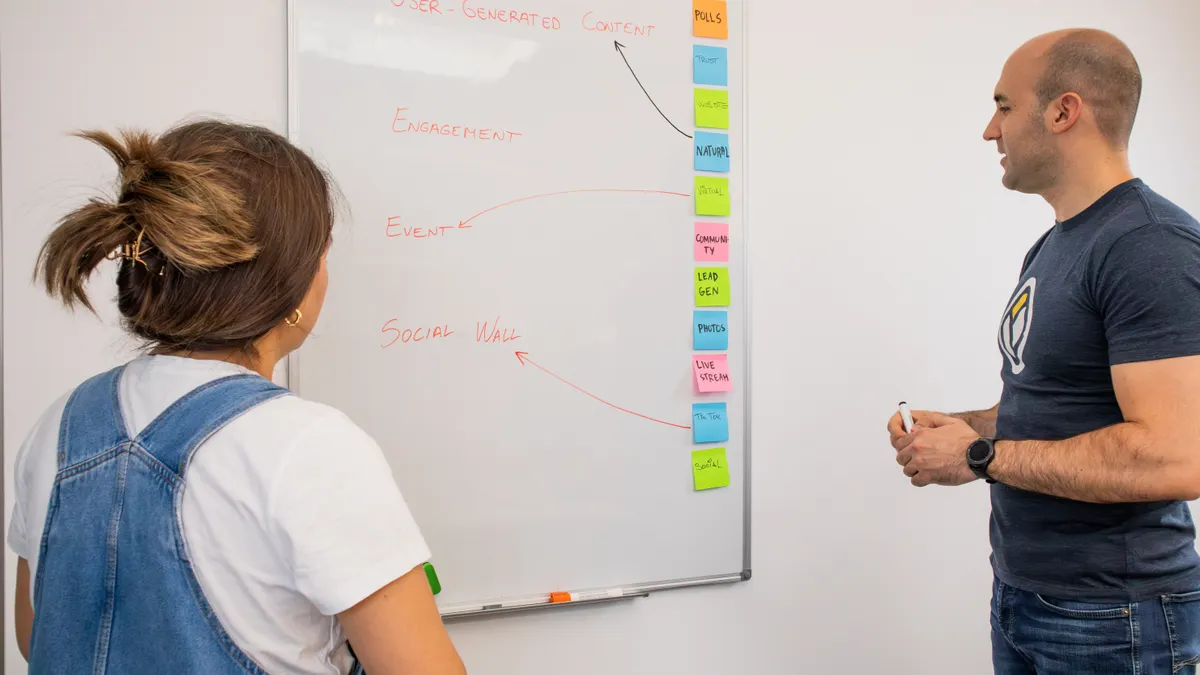
Content overlap prevention means assigning one distinct job to each article before writing begins. If two briefs are built from the same loose idea, the overlap is already baked in, even if the final drafts are rewritten later. In practice, one page should own one query.
The planning stage is where most confusion comes from. A topic such as “AI content planning” can produce 20 angles if nobody decides which page owns which search intent. One article should answer the main query; the others should support it with narrower questions, process steps, or comparison points. That is the point of a topic map: it is a routing document, not a pile of headlines.
The mistake that causes the most damage is letting every writer interpret the same keyword cluster independently. When that happens, each draft tends to repeat the same definitions, the same examples, and the same first-step advice. The result looks “covered” on a spreadsheet, but the reader sees three nearly identical pages. A 3-page cluster can still collapse into 1 idea if the planning is loose.
Use a hard rule: one primary query per brief, one main angle per article, and no shared paragraph themes unless the page is intentionally a subpage. A content brief should say what this page owns and what it must not answer. That boundary matters more than word count. If the boundary is unclear, the article will drift.
This is also why overlap prevention is not the same as duplicate-content cleanup. Cleanup happens after the damage is done. Planning separation keeps the damage from landing in the editorial queue in the first place. That is the right place to solve it if the site is producing 10, 50, or 200 articles at a time.
How do you split a large keyword cluster without overlap?
You split a large keyword cluster by separating queries, not just phrasing. A cluster is useful only when every page in it has a different search job, different angle, or different level of depth.
The fastest workable way to do this is to map each candidate topic to one of four buckets:
- Core query — the broadest phrase and the page most likely to be the hub or main explainer.
- Narrow query — a more specific question that deserves its own article.
- Support query — a related question that belongs in a section, not its own page.
- Blocked query — a topic that belongs to another URL and should be removed from this plan.
That sorting step is where most overlap disappears. If two ideas both answer “how to plan content briefs for AI articles,” one of them needs a different job title or needs to be cut.
A useful test is the 2-minute summary test. If two planned articles can be summarized with the same five sentences, they are not separate pages. They are one page with duplicate angles. The same test works for briefs: if the first paragraph of one brief could fit into the other without losing meaning, the cluster is too loose.
This is also the place to name the primary query and the secondary keyword for each brief. The primary query tells the writer what the page must satisfy. The secondary keyword should add context, not pull the article into a second subject. If the secondary keyword needs its own major section, it is probably not secondary. Treat that as a review cue, not a hard rule in every case.
For large programs, I recommend recording the cluster in a spreadsheet with columns for query intent, intended page type, and “do not cover” notes. A simple grid often beats a long brainstorming doc because it forces decisions. A vague list invites overlap.
Build a topic map that assigns one angle per URL
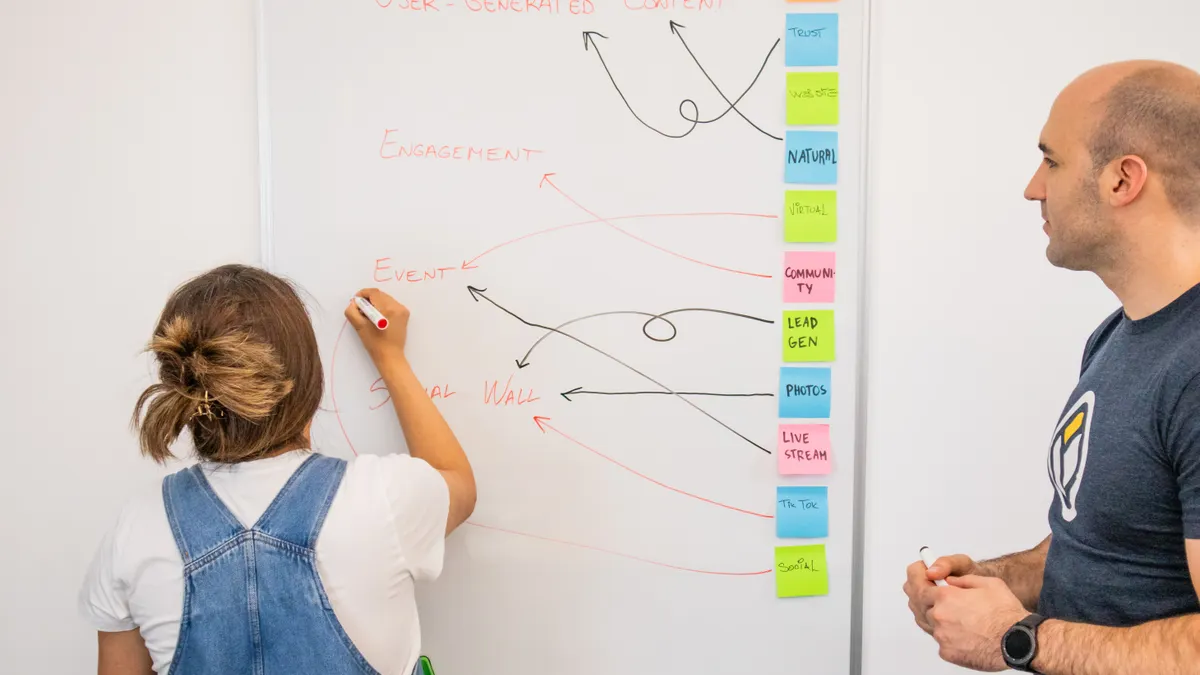
A topic map prevents overlap by turning ideas into lanes. Each URL gets one lane, one main question, and one reason to exist. For planning large article sets, that is the safest way to avoid collisions.
The map should include at least these fields for every planned page: URL slug, primary query, secondary keyword, audience stage, content angle, and exclusions. That sounds administrative, but it saves time later. A writer can work faster with a 6-column map than with a messy brainstorm of 40 similar titles.
The important field is angle. Two pages can share a topic area and still stay distinct if the angle changes. For example, one page may explain how to prevent overlap in briefs, while another page in the same cluster could explain how to review finished drafts for accidental duplication. Those are not interchangeable. They answer different moments in the workflow.
The map also exposes accidental cannibalization before production starts. If three pages are all aimed at the same reader stage and all use the same verb in the headline, one of them probably does not belong. A good map makes that obvious in under 5 minutes.
I would not use a topic map that stops at keywords alone. Keywords are too blunt for planning a large set. A search phrase tells you what people type. It does not tell you whether the article should teach, compare, troubleshoot, or route the reader elsewhere. That is why the map needs both query separation and angle mapping.
A practical standard helps here. If a page cannot be described in one sentence that includes its audience and job, it is not ready for the map. “Explains content overlap prevention for SEO teams building 30 articles a month” is a real assignment. “Talks about overlap” is not.
This is also the right point to align the set with the broader bulk AI content architecture hub, so the cluster supports the system instead of competing with it.
Turn the content brief into a guardrail, not a prompt dump
A content brief prevents overlap when it gives the writer boundaries, not just instructions. A brief that only lists length, keywords, and tone still leaves room for two writers to land on the same structure and the same supporting points. For YMYL-adjacent planning, consult an SEO or editorial professional if the page affects medical, financial, or legal decisions.
A good brief should include five guardrails:
- the one primary query the page must answer
- the angle the page owns
- the sections it should include
- the related ideas it must not cover
- the reader state at the start and end of the article
That last point matters because overlap often comes from trying to make every page “complete.” A page about topic deduplication should not also become a general guide to content calendars, SEO clustering, and publishing workflow. That sort of sprawl makes the article feel thorough for a moment and useless for the cluster.
The brief should also route supporting terms to specific sections. If “content guardrails” is a supporting phrase, it might belong in the closing section on planning rules rather than in the intro. If “brief routing” is a key subtopic, it should be assigned to one section only, not repeated across three sections in different words. This kind of routing keeps the page readable and gives the writer fewer chances to drift.
When a brief is assembled from a keyword list alone, it usually produces overlap by accident. When it is built from a topic map, it has a job. That job can be checked quickly: if the brief’s main question and its exclusions are both clear, the article is less likely to compete with its siblings.
A useful cutoff is to keep one brief focused on one page-level question and no more than 3 supporting angles. Once a brief tries to answer 6 or 7 questions, the edges blur. The result is a page that sounds comprehensive and still collides with the rest of the set.
Use routing rules for queries, not just titles
Routing rules keep similar questions from landing on the same page. Titles alone are too late in the process; the overlap has already spread into the outline by then.
The simplest routing rule is this: if a query can be answered fully in 700 to 1,000 words and does not need a separate decision tree, it stays inside an existing page. If it needs its own audience, workflow, or comparison, it gets its own URL. That is not a universal law, but it is a useful planning standard for large sets.
Routing should happen at three levels:
- Before assignment: decide which article owns the query.
- During briefing: exclude adjacent topics that belong elsewhere.
- During outline review: stop section drift before drafting begins.
This is where common overlap mistakes can be caught early. One is title mirroring: two headlines that differ by one word but promise the same answer. Another is outline duplication: two articles with different intros and the same three middle sections. A third is “keyword shadowing,” where a secondary keyword becomes a second primary topic halfway through the article. For example, a 5-section outline can still become two articles in one if the secondary term takes over.
The cost is real even if the pages are not identical. Overlap wastes writer time, makes editorial review slower, and blurs what the site stands for. Readers also notice when pages feel like shuffled versions of one another. That weakens trust faster than a few missing keywords ever could.
A good routing rule also protects future updates. If the page boundaries are clear from the start, it is easier to add new articles later without reopening old ones. The cluster stays legible instead of turning into a tangle of near-duplicates.
For teams working at scale, a 1-page routing sheet is often enough. It does not need fancy software. It needs discipline: one query, one page, one angle, one owner.
What content overlap mistakes cost you
Content overlap usually costs clarity first and ranking second. The reader lands on one page, sees familiar wording, and cannot tell why it exists separately from the other page.
The most common mistake is broadening every brief “just in case.” That creates pages with the same introduction, the same definitions, and the same examples. A second mistake is assigning multiple writers the same cluster without a shared map. Even strong writers will converge on the same obvious structure if the brief is vague enough.
A third mistake is treating secondary keywords as equal to the primary query. That usually leads to a page with two competing missions. The reader gets a little of both and enough of neither. In a set of 15 articles, that confusion multiplies quickly. If the topic affects high-stakes decisions, consult a qualified professional before publishing.
The fix is to make trade-offs explicit. Some ideas do not deserve their own page. Some phrases belong in a subheading, not the title. Some closely related queries should be merged into one stronger article. That is a judgment call, and it is better to make it early than to force a split later.
There is also a cost in review time. Overlapping drafts take longer to edit because every section must be checked against sibling pages. If the overlap is severe, the editor ends up doing structural surgery instead of normal revision. That is expensive even when nobody tracks it on a spreadsheet.
The blunt rule is this: if a planned page cannot be distinguished from another page in 30 seconds, it should not be published as a separate article. Merge it, re-angle it, or move it into supporting content. That standard is strict, but it keeps the set clean.
A simple planning workflow I would use for a 20-article set
I would plan a 20-article set by moving from cluster to map to brief in three passes. First, I would sort all candidate topics into a single spreadsheet and remove duplicates at the query level. Second, I would assign one angle per URL and mark the exclusions for each page. Third, I would write the content brief only after the routing is settled.
Here is the practical sequence:
- List all candidate topics in one sheet. Add the primary query, likely secondary keyword, and intended reader stage for each item. The result should be a clean inventory, not a brainstorm with 80 rows.
- Group by topic cluster. Put similar queries together and identify the one page that deserves to be the main answer. That usually reduces the set before any drafting begins.
- Write a one-sentence job statement for each URL. If the sentence is vague, the page is not ready. A job statement should name the query and the angle in under 25 words.
- Add exclusions. For each brief, list the sibling topics it must not cover. This is the fastest way to prevent accidental spread.
- Build the brief around 3 to 5 sections. More sections often means the article is trying to do too much. Fewer sections keep the article anchored to one purpose.
- Review the set for shared openings and shared section names. If multiple briefs use the same structure, the writers will probably produce overlapping drafts.
- Lock the map before drafting. Once writers start, changes create drift. A locked map gives the set a stable boundary.
This workflow is not fancy, and that is the point. Overlap prevention works best when the planning system is plain enough to repeat every week. The goal is not perfect taxonomy. The goal is to keep each article on its own track so the set can grow without stepping on itself.
Key takeaways for planning cleaner article sets
- Start with query separation, not headlines.
- Give every URL one angle, one reader job, and one primary query.
- Use a topic map to decide what each page owns and what it excludes.
- Put secondary keywords in service of the page, not in competition with it.
- Treat the content brief as a routing document, not a long prompt.
- Merge weak overlaps early instead of forcing separate pages to survive.
How do i stop two ai articles from covering the same thing?
Give each article a different primary query and a different angle before any drafting begins. If both briefs can be summarized in the same sentence, they are not separate pages. A topic map and exclusion notes in the brief help keep each draft on its own track.
How do i keep bulk content from cannibalizing itself?
Keep one page per query job and do not let supporting terms become second topics. Cannibalization usually starts when several articles answer the same reader intent with slightly different wording. A routing sheet and a strict brief review keep the cluster from collapsing into duplicates.
How do i separate similar article ideas?
Separate them by intent, audience stage, or workflow step. If two ideas still feel close, compare the first paragraph they would each need; if those paragraphs overlap, merge or re-angle one of them. A topic map makes those differences visible before the outline stage.
Drafted with AI; not yet reviewed by a person.